
The Odds Don't Know Finley
Written By Christopher “Lucky” Stewart
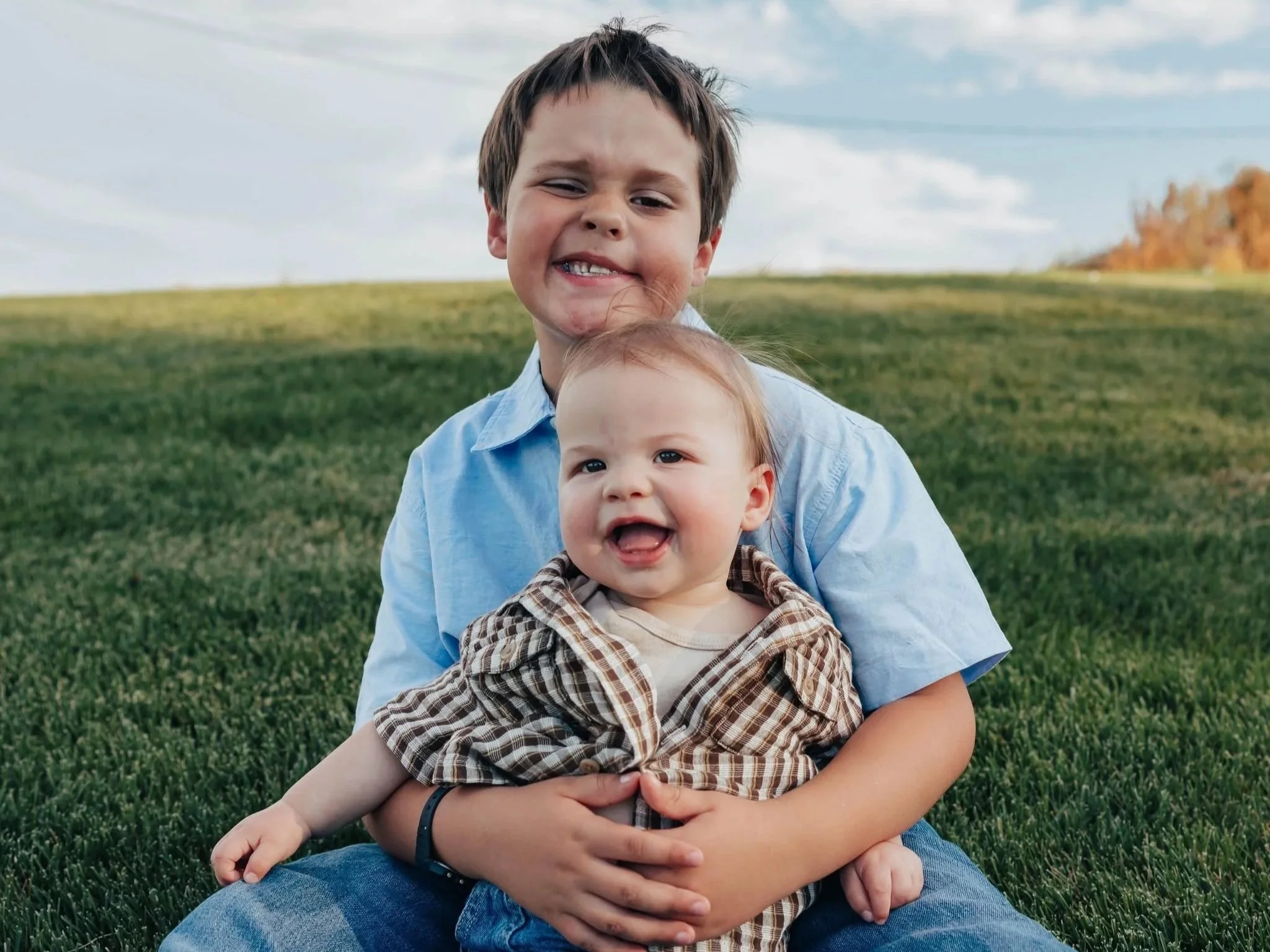
Where do you even start with Finley?
His mother asks the question herself and admits it is a hard one. Every parent thinks their child is special, and rightfully so. But with Finley, there has always been something magnetic, a pull that draws people in and makes them stay. Even as a baby, he seemed impatient with being a baby. He crawled early. He talked early. He took his first steps two days before he turned ten months old, as if he had somewhere to be.
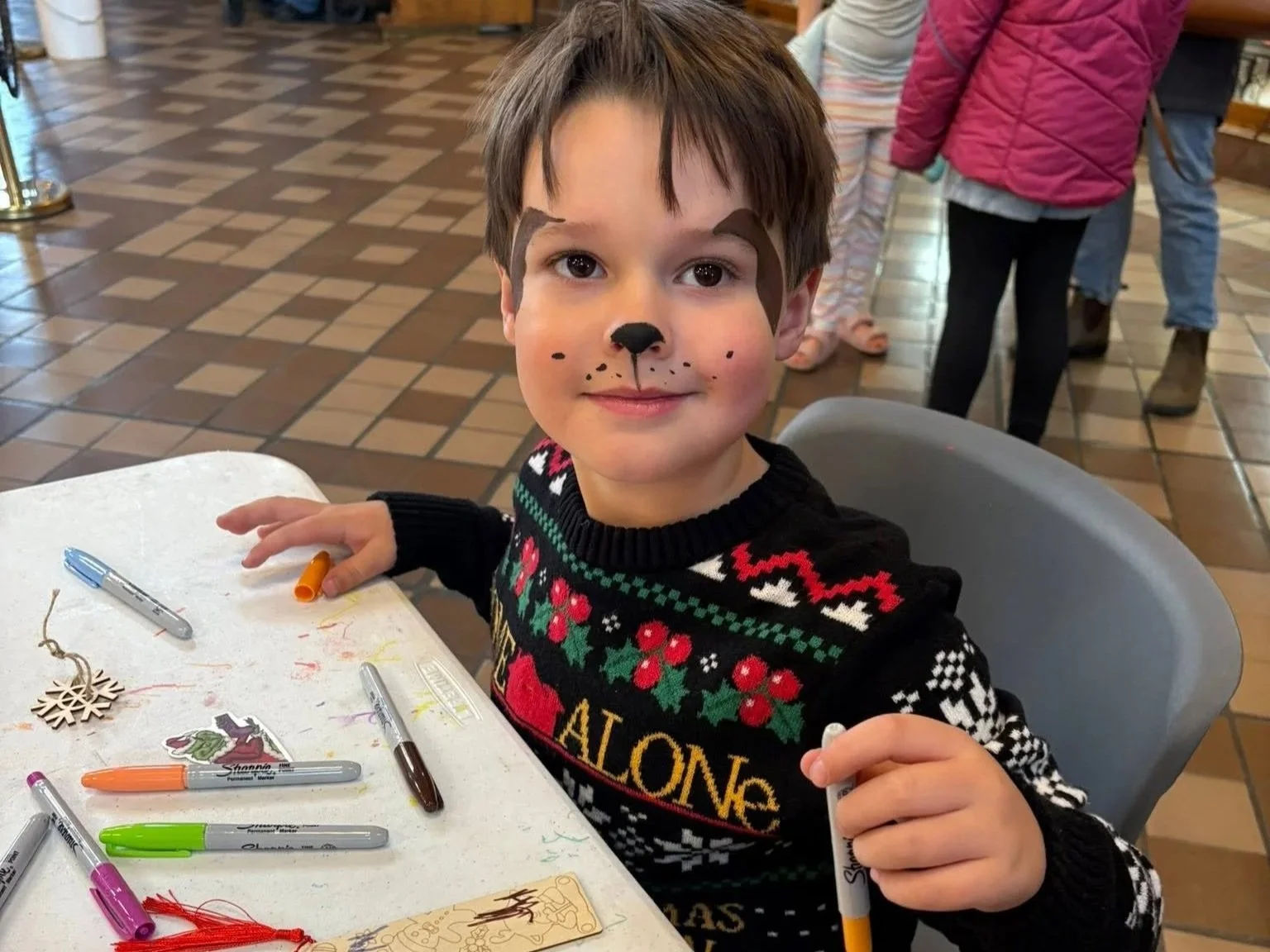
He is five years old with an old soul. He is also, by every account, hilarious, with comedic timing that catches adults off guard. When he was two, his mother would repeat his one-liners to her coworkers, who assumed she was just another proud mom stretching the truth. Then they would meet him. "Oh, I totally thought you were exaggerating or making up his little personality," they would tell her afterward. "But nope, this kid truly is a character."
Underneath the humor is a sweetness that stops people in their tracks. Once, when his uncle joked that he needed money for ice cream, Finley disappeared from the room. He came back a moment later carrying his piggy bank, holding it out with complete sincerity. "Here, Uncle Adam," he said. "You can have my money."
His family puts it simply: to know Finley is to love Finley.
The Life Before
Until this summer, the rhythm of Finley's days looked like the rhythm of childhood itself. He is a social butterfly who almost never plays alone. Most days were spent with the neighborhood kids, riding his scooter up and down the street, or doing anything and everything outside. He has played T-ball, basketball, and football through the local Star Recreation leagues. He gave up naps early in life, not because he didn't need them, but because he couldn't stand the thought of missing out on the fun. From day one, he has been a boy in motion, and he does it all with a smile on his face.
Above all, he loves any chance he gets to wrestle his Dada.
At home, life was full in the best way. Finley was healthy, happy, and getting ready for kindergarten, practicing his math and reading at the kitchen table. Seven months ago, he became a big brother when his parents welcomed another baby boy. The house was loud, busy, and exactly what his parents had always wanted.
"Our world was amazing," his mother says of the life they had before July 7th — the day, in her words, that their lives came crashing down.
But the unraveling had actually started weeks earlier, with something so ordinary that no one could have imagined where it would lead.
A Cavity, a Droop, and a Feeling Something Was Wrong
It started on June 16th with a trip to the dentist. Finley needed a cavity filled — the kind of appointment thousands of five-year-olds have every day. But the day after, one side of his face was still drooping.
His parents assumed it was the numbing medication. Maybe his body was just taking a little longer to process it. A week went by, and the droop didn't improve. They took him to his primary care doctor, who thought it might be nerve damage and sent them back to the dentist. The dentist was baffled: the way Finley's face was drooping didn't correspond with the area where they had worked.
Then Finley, the boy who never stopped moving started to feel sluggish.
On Saturday, June 27th, he woke up sick and began throwing up. His father, Alex, rushed him to the emergency room. Doctors ran tests and drew labs. Everything came back normal. After an ultrasound, they concluded that Finley was constipated, and that the facial paralysis was, as suspected, nerve damage from the dental visit.
The family went home and followed the instructions they were given. Things did not get better. They got progressively worse.
So his parents did what parents do when every reassurance stops matching what they see in their own child. They took Finley back to the emergency room, and this time they demanded an MRI.
The pediatrician came back with the results. There was a tumor in Finley's brain. A specialist would be in shortly to talk with them.
The Diagnosis
In the hours that followed, waiting for the specialist, Finley's parents held on to the only thing they had: hope. A tumor was terrifying, but this was 2026. Medicine could do remarkable things. They told themselves this was a bump in the road, a hard one, but a bump. With today's technology, their boy would be fine.
Then the specialist came in. He explained exactly where the tumor was and what it was: DIPG. Diffuse intrinsic pontine glioma.
The words meant nothing to them yet. What came next meant everything.
"But he'll be okay... right?" his mother asked.
The doctor had tears in his eyes when he answered. This, he told them, is not something most people come back from.
"In that instant," she says, "our family felt as if we had died a million deaths."
Days earlier, they had the healthiest, happiest, most energetic boy they knew. Now they were being told they might get one good year with him. "That is the hardest thing I will ever hear in my life," his mother says.
Understanding DIPG: The Disease Most Families Have Never Heard Of
Most people have never heard of DIPG until it enters their lives. Then they can never forget it.
Diffuse intrinsic pontine glioma is a fast-growing brain tumor that forms in the pons, a small but essential part of the brain stem. The pons is the body's control tower. It manages breathing, heart rate, and blood pressure, along with the nerves and muscles a child uses to see, hear, walk, talk, and eat, according to the National Cancer Institute. This is why Finley's first symptom was a drooping face — and why doctors, dentists, and even emergency room tests kept pointing elsewhere. DIPG announces itself in ways that look like a dozen more ordinary problems.
What makes DIPG so devastating is contained in its first word: diffuse. The tumor does not grow as a single, contained mass that a surgeon could cut away. Instead, its cells thread themselves through the healthy tissue of the pons, weaving cancer and healthy brain together until they cannot be separated. Removing the tumor would mean removing the part of the brain that keeps a child breathing. Surgery, for nearly every child with DIPG, is simply not possible.
It is also rare. About 300 children in the United States are diagnosed with DIPG each year, most between the ages of five and ten, according to the National Cancer Institute — children Finley's age, in the middle of learning to read, losing their first teeth, getting ready for kindergarten. There are no known risk factors and no known cause. Nothing a parent did, and nothing a parent could have done differently.
And it is, by the numbers, one of the deadliest childhood cancers that exists. Fewer than 10 percent of children with DIPG survive two years from diagnosis, according to the International DIPG/DMG Registry. Standard chemotherapy has never been shown to help, in part because the brain's natural protective barrier blocks most drugs from reaching the tumor. The standard treatment — the one Finley began almost immediately — is radiation therapy, which improves symptoms in roughly 80 percent of children and can shrink the tumor for a time, giving families months that matter immeasurably.
For decades, that was the whole story. It isn't anymore.
Researchers have discovered that most DIPG tumors carry a specific genetic mutation, known as H3 K27M, and that discovery has transformed the field. In August 2025, the U.S. Food and Drug Administration granted accelerated approval to dordaviprone — the first drug ever approved for this family of tumors. At Stanford, an experimental CAR T-cell therapy, which reprograms a child's own immune cells to hunt the tumor, produced neurological improvement in nine of the first eleven patients treated, the National Cancer Institute reported, and extended survival beyond historical expectations for several of them. New clinical trials are opening across the country.
None of these are cures. But for the first time in generations, the science is moving — and every trial, every study, and every dollar of research funding is built on families willing to fight and communities willing to care about a disease most people have never heard of.
The New Reality
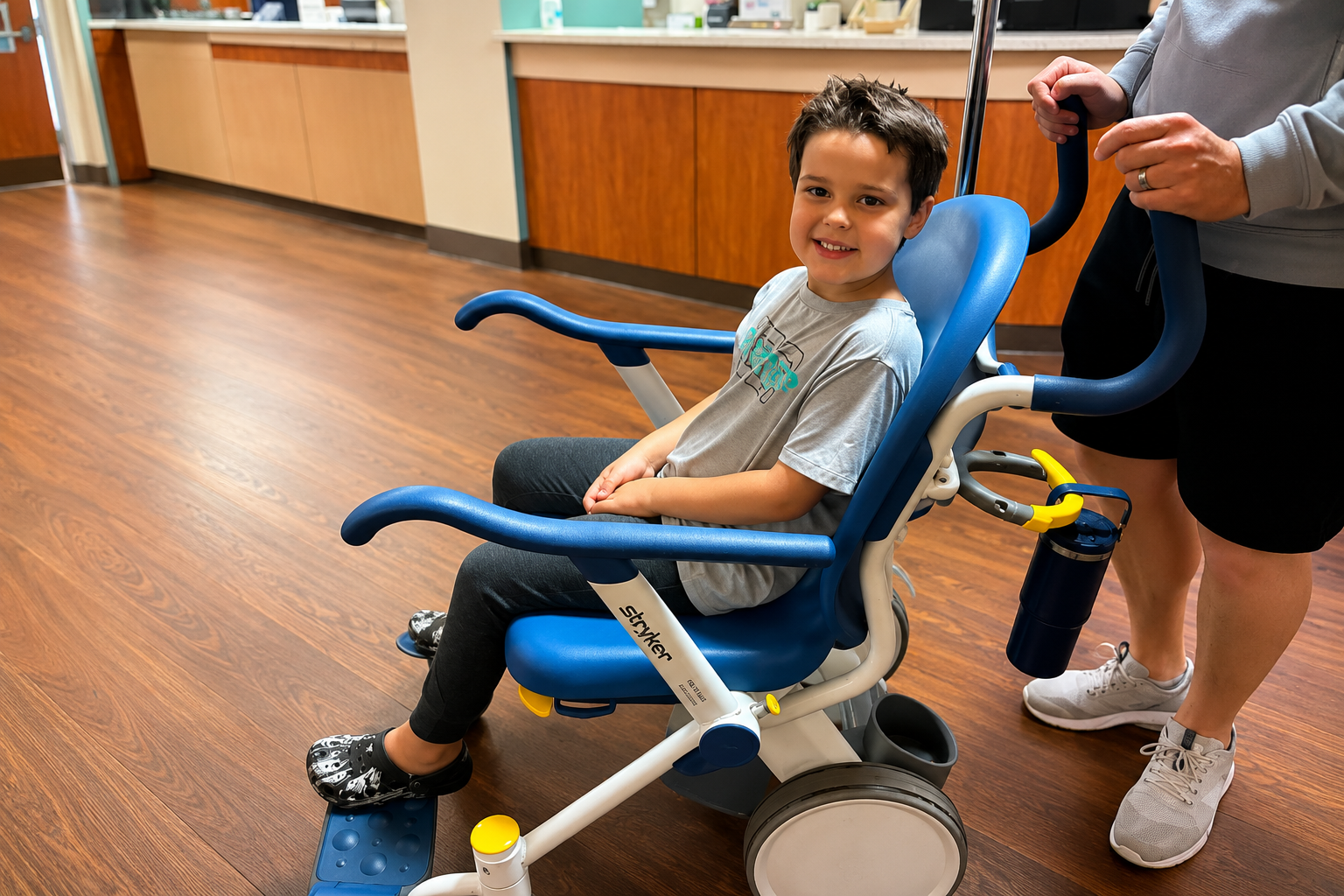
Because of the tumor's type, location, and size, radiation needed to start right away, five days a week, on top of a constant stream of doctors' appointments.
Overnight, the architecture of the family's life was torn down and rebuilt around one purpose. Finley's mother had spent nine years as the manager of the Frontier, a job she genuinely loved. She will not be returning. Alex had just started a new job, which meant no paid time off had accumulated yet. And in the middle of it all is Finley's baby brother, seven months old, who still needs feedings and naps and some kind of consistency from parents whose world has been turned inside out.
"Now mine and Alex's new job has become taking care of Finley," his mother says. "It has been difficult, but like I have always said, we are never afraid of a challenge."
What has been the hard part? "I think the better question is, what hasn't been the hard part?" she says. Not crying in front of Finley may be the hardest discipline of all — because Finley cannot stand to see the people he loves in pain. If he catches a loved one looking sad, he is the first to wrap them in a hug and tell them he loves them. So his parents hold their tears until he cannot see them.
"Seeing my boy in discomfort, though, is by far the hardest," she says. "Just like any parent, you wish you could take their pain for yourself if it meant taking it away from them."
The first radiation treatments hit Finley hard, and doctors have cautioned that things may get a little worse before the swelling goes down. Still, inside their home, his parents are protecting something the disease cannot touch: Finley's childhood. He plays when he has the energy. The family holds dinner nights together. And at the kitchen table, a five-year-old boy keeps working on his math and his reading, getting ready for kindergarten.
The Army Behind Them
One of the first calls Finley's mother made, before the family even knew how serious things were, was to Ryan and Des Stienbroner, the owners of the Frontier, where she had worked for nearly a decade. Their response set the tone for everything that followed. They told her not to worry about work. They would cover her shifts themselves. And then, without being asked, they got to work planning a fundraiser for the family.
"They have been there for us from day one," she says. "We couldn't be more thankful for the love they have shown our family and our boy Finley."
They were only the beginning. In the weeks since the diagnosis, family, friends, strangers, and even members of Finley's medical team have, in his mother's words, "come out of the woodwork" to show the family they are not alone. Neighbors drop off meals. People offer to babysit the baby. Others come to clean the house. Donations arrive from people the family has never met, donations that will let both parents be at every appointment, every radiation treatment, and, as his mother puts it, "every nap that he needs mommy cuddles."
"People's generosity is mind-blowing," she says. "Times are tough for most right now, but the fact so many have already helped leaves me speechless. These people have given me a new faith in humanity."
The doctor told the family that with Finley's diagnosis, every moment is precious now. What the community's kindness is really buying is not groceries or gas or bills. It is those moments, hours a mother and father get to spend beside their son instead of away from him. "Because every second counts," she says.
There is a quiet symmetry in it. Long before any of this happened, Finley's mother built her life around small acts of kindness. She was raised that way, watching her own father do the same for others. Years in the service industry taught her that people are often carrying their hardest days invisibly, and that something as small as buying a drink, giving a hug, or simply listening can mean the world to someone. Now that kindness is flowing back toward her family from every direction from the people she served, from strangers, from a whole community that decided a five-year-old boy would not fight alone.
"Our son has an army fighting right behind him," she says.
The Defiance of Hope
Amid all the hardship and heartache, the family holds on to something they insist is not naive: hope. Not the fragile kind that ignores reality, but the kind that looks reality in the eye and keeps going anyway.
They have hope that Finley will get into a clinical trial that gives them more time and more options. They have hope because medical advancements are being made every day — because for the first time in generations, drugs are being approved and immune therapies are showing promise for children exactly like him. They have hope because of the army of people surrounding them with love. And they have hope because of who Finley is: a boy with so much love and spunk in his heart, his mother says, that it is meant to be shared with the world.
"We know this can't be where his story ends," she says.
The doctors have their statistics, and the family does not pretend otherwise. But statistics describe the past. They measure what has happened to other children, in other years, before other breakthroughs. They cannot measure a five-year-old who hands over his piggy bank so his uncle can buy ice cream. They cannot measure a boy who hugs the grown-ups when they cry.
His mother says it best, in the words that have become the family's anthem:
"The odds might be stacked against us, but the odds also don't know us — our family, our community. And above all, they don't know our Finley boy."
What Finley's Story Asks of Us
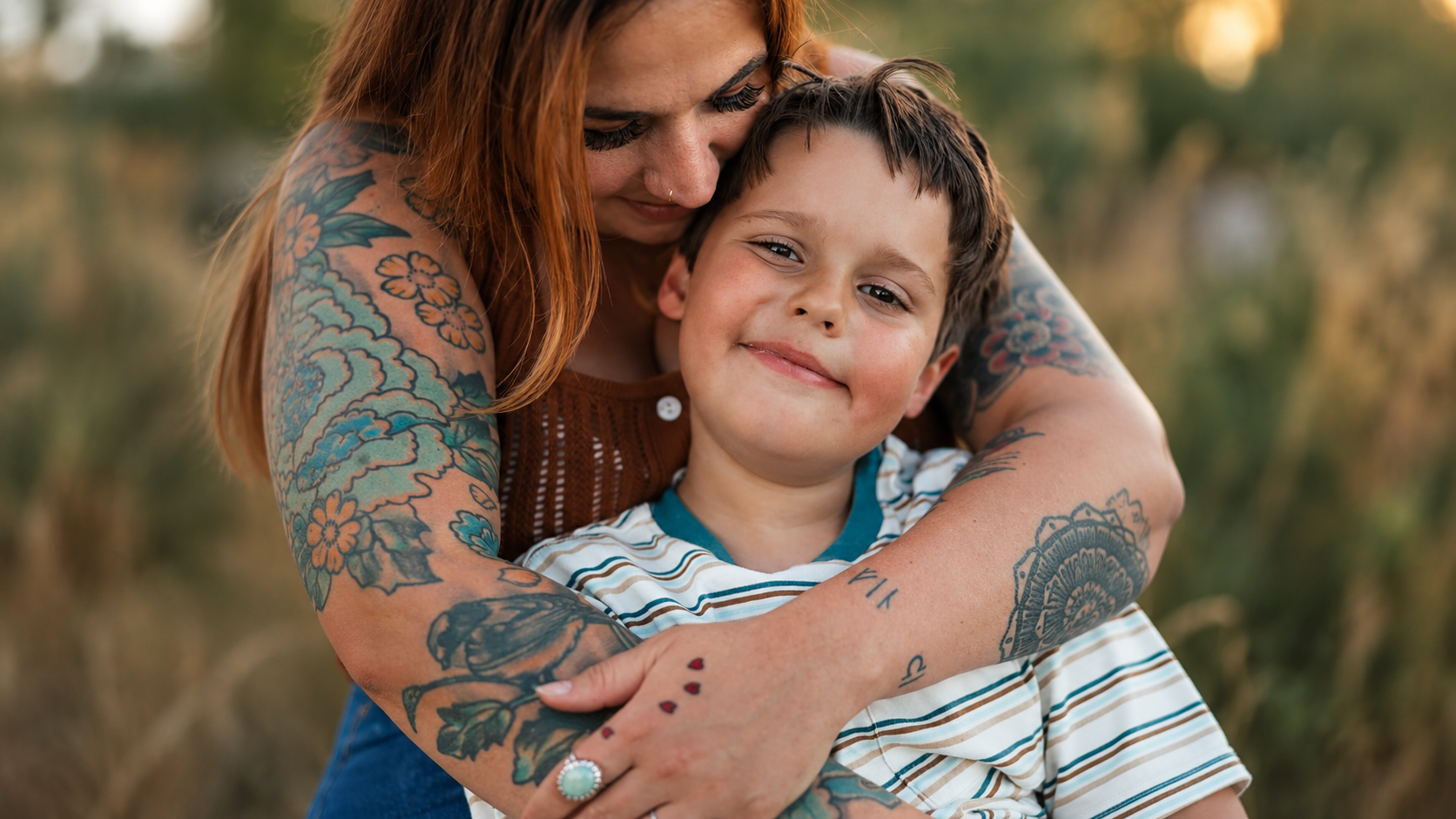
In the end, this is a story about cancer the way a lighthouse is a story about storms. The storm is real. But what you remember is the light.
When Finley's mother came home from the hospital, she looked around her house and felt something crystallize. The furniture, the belongings, the material things, none of it mattered anymore. "All that truly matters," she says, "is that I have my family in my arms at the end of each day."
And she hopes people take one more thing from their story: do not give up on your community, or on each other. She has spent her life believing that small acts of kindness go a long way, a drink bought for a stranger, a hug, a few minutes of real listening. She believed it before July 7th. Now she has proof, delivered daily to her doorstep in casserole dishes and childcare offers and envelopes from people she has never met.
"We are all dealing with our own personal struggles," she says. "But if this can show the community anything, it's that we are all in this together. And there truly are angels that walk among us. Show kindness, show compassion, and just show each other love. Together we can get through even the darkest times."
Somewhere tonight, a five-year-old boy with an old soul will finish his math practice, hug his baby brother, and if the energy is there, challenge his Dada to one more wrestling match. He is not a statistic. He is not a diagnosis.
He is Finley. And an entire community is standing behind him.
SIDEBAR — What Is DIPG?
The definition. Diffuse intrinsic pontine glioma (DIPG) is a fast-growing, inoperable brain tumor that develops in the pons, the part of the brain stem that controls breathing, heart rate, blood pressure, and the nerves used for seeing, hearing, swallowing, and moving. It primarily affects children between the ages of 5 and 10, with roughly 300 new diagnoses in the United States each year.
Warning signs parents should know. DIPG symptoms tend to appear rapidly, often over days or weeks. The National Cancer Institute advises seeing a doctor immediately if a child develops any of the following, especially in combination:
Warning SignWhat It Can Look LikeFacial droopingWeakness or sagging on one side of the faceEye and vision problemsAn eye turning inward, double or blurred visionTrouble swallowing or speakingDifficulty chewing, slurred speech, choking on foodBalance and coordination changesStumbling, clumsiness, weakness in arms or legsHeadaches and vomitingMorning headaches, or headaches that improve after vomitingBehavior changesNew irritability, fatigue, or trouble learning
These symptoms are usually caused by something far less serious. But as Finley's family learned, a parent's instinct matters — if symptoms persist or worsen without a clear explanation, keep asking questions.
Diagnosis. DIPG is typically identified through an MRI of the brain. In some cases, a biopsy is performed to analyze the tumor's genetic makeup, which can open the door to targeted therapies and clinical trials.
Treatment. Because the tumor weaves through healthy brain tissue in a region the body cannot live without, surgery is not an option. Radiation therapy is the standard treatment; it improves symptoms in about 80 percent of children and can slow the tumor's growth for a time. Steroids are often used to reduce swelling. Traditional chemotherapy has not been shown to improve survival.
Current research. The discovery of the H3 K27M mutation, found in most DIPG tumors, has accelerated the field dramatically. In August 2025, the FDA approved dordaviprone (Modeyso), the first drug ever approved for this class of tumors. CAR T-cell immunotherapy trials have produced encouraging early results, and new clinical trials continue to open at children's hospitals across the country.
Organizations funding DIPG research include The Cure Starts Now, the ChadTough Defeat DIPG Foundation, the Michael Mosier Defeat DIPG Foundation, and the Pediatric Brain Tumor Foundation, alongside the International DIPG/DMG Registry, which pools patient data worldwide to speed discovery.
Resources
How to support Finley's family. A fundraiser organized by the owners of the Frontier is underway to help the family cover living expenses and medical costs while both parents care for Finley full time. Community members can also help with meals, childcare, and household support.
Pediatric brain tumor resources. The National Cancer Institute offers plain-language information about DIPG for families, and its Cancer Information Service (1-800-4-CANCER) can help families find specialists and second opinions. The American Childhood Cancer Organization provides guides and support for families navigating a new diagnosis.
DIPG awareness and research organizations. The International DIPG/DMG Registry (1-877-349-8074), The Cure Starts Now and its resource site DIPG.org, the ChadTough Defeat DIPG Foundation, and the Michael Mosier Defeat DIPG Foundation fund research and support families affected by DIPG.
Clinical trial information. Families can search for open DIPG and diffuse midline glioma trials at ClinicalTrials.gov or through the DIPG/DMG Registry's clinical trials page, and should ask their pediatric neuro-oncology team about eligibility for targeted therapies and immunotherapy studies.
Children's brain cancer foundations. The Pediatric Brain Tumor Foundation and St. Jude Children's Research Hospital support research, treatment, and family services for children with brain tumors nationwide.
Medical information in this story was verified against the National Cancer Institute, the International DIPG/DMG Registry, the U.S. Food and Drug Administration, and The Cure Starts Now Cancer Resource Network as of July 2026. All quotes and events are drawn directly from the family's own account.
