
The Little Boy in Meridian Fighting Brain Cancer, and the Village Fighting With Him
A story from our community, written by Chris “Lucky” Stewart — Meridian, Idaho
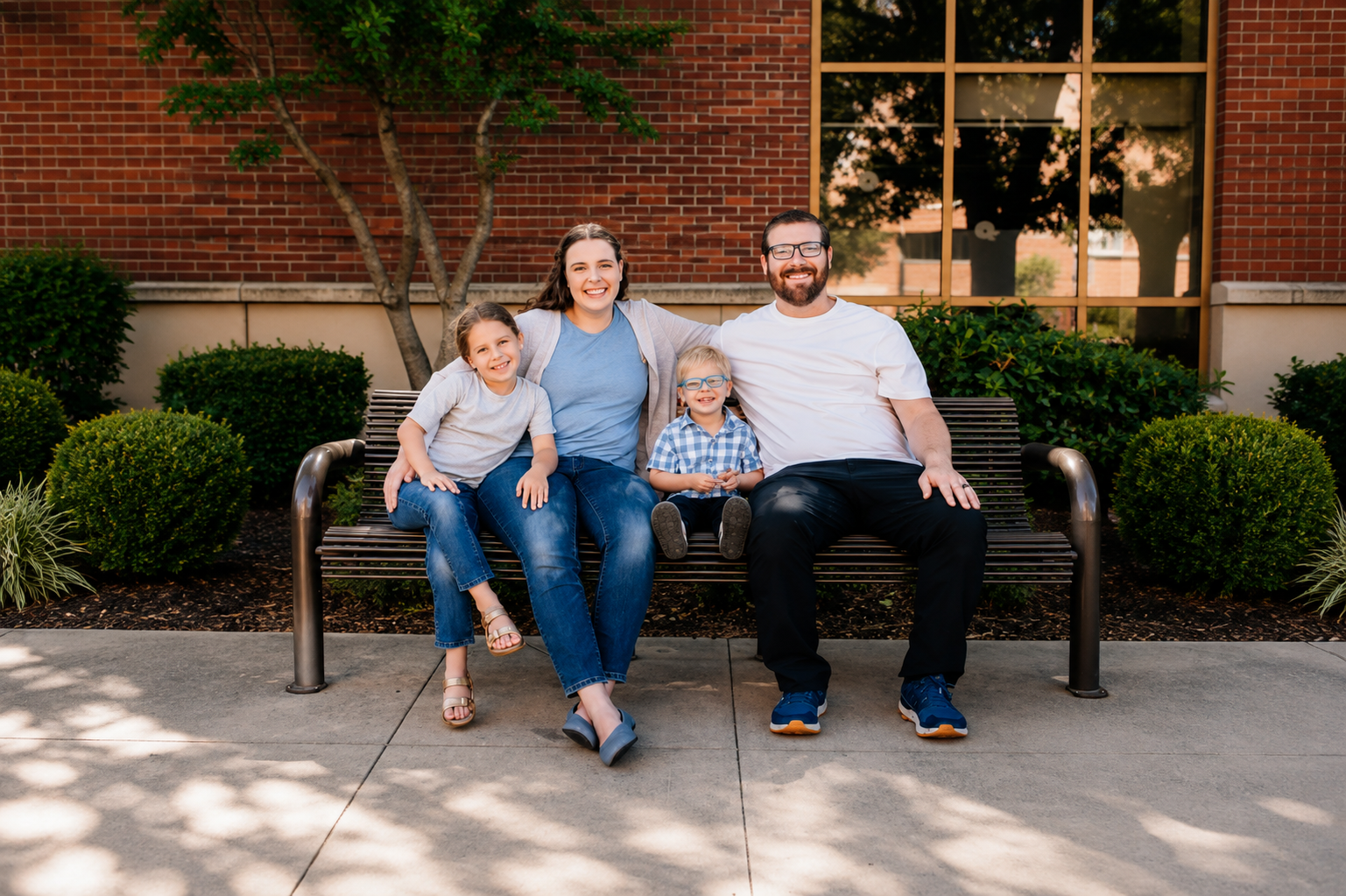
Ask Kasey Orlik Hill to describe her son, and she laughs before she answers.
"Gosh, how do you wrap up a rambunctious three-year-old in just a few sentences?"
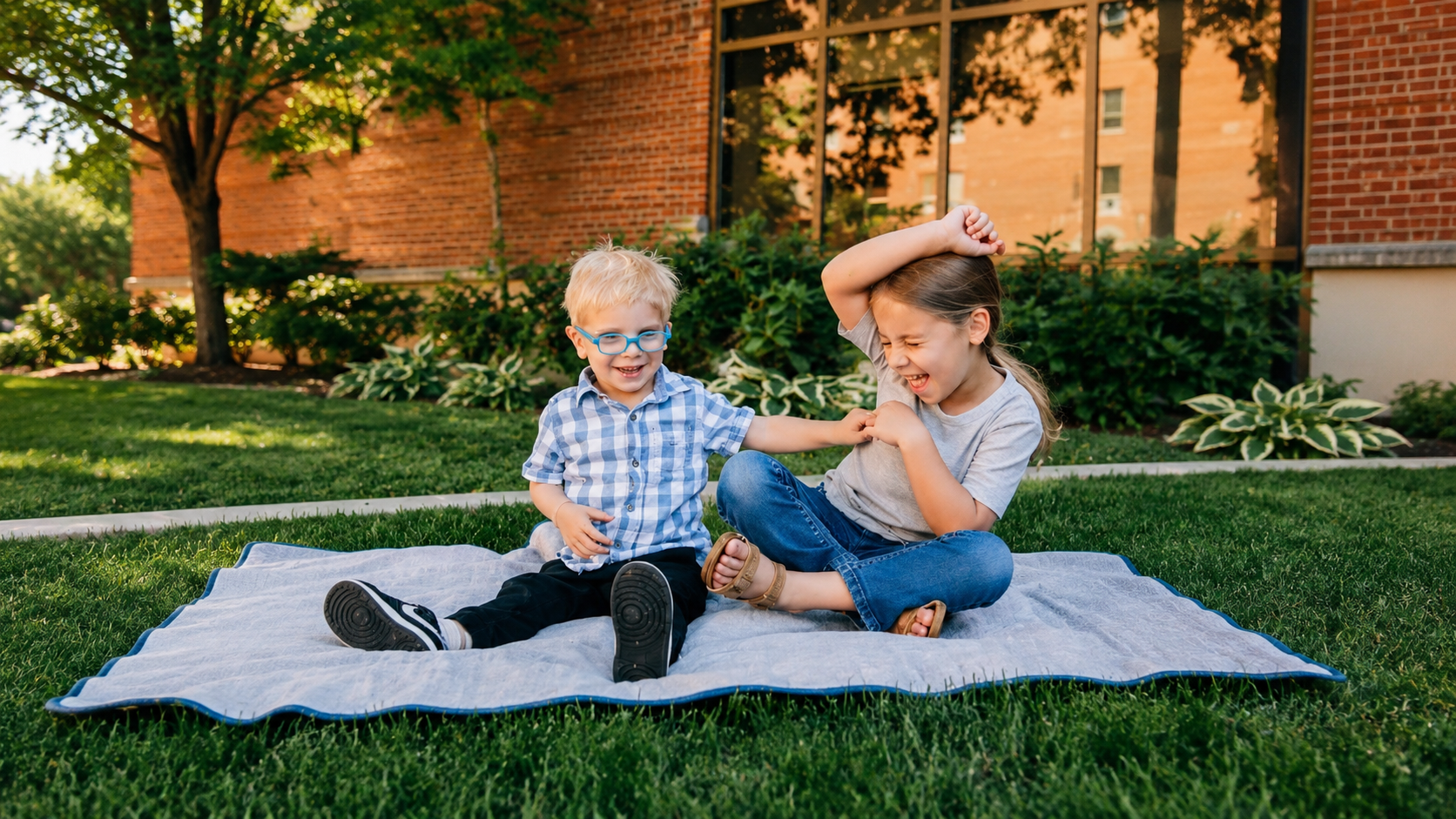
Elliott is sweet and silly and wild in all the best ways, the kind of kid who is always climbing something, jumping off something, getting into something. His parents joke that he has no sense of self-preservation. He's obsessed with Paw Patrol and Spider-Man, and if you ask his favorite color, he'll tell you it's "dark blue like Chase." He adores his friends and his grandparents. He thinks his big sister Amelia hung the moon and would spend every waking moment with her if he could.
Even now, in a hospital room, tethered to IV poles Elliott is still Elliott. He has a little shopping cart he likes to push around the hospital, and sometimes he'll pretend to ram it into the nurses and therapists until they crack up and "fight back."
He is, in his mom's words, exactly the silly, wild, feral little boy every three-year-old should be.
He is also fighting brain cancer.
The Stomach Bug That Wasn't
Here is the part of Elliott's story that will stay with you, because it could belong to any family, on any street, in any town.
For six weeks this spring, Elliott kept getting sick. Five separate times, out of nowhere, he'd start throwing up. It sounded alarming until you knew the context: Kasey ran a home daycare, and a stomach bug had been tearing through it for weeks. Every child had caught it. Amelia had it twice. Both parents got it. Someone was sick almost every week, and Kasey was bleaching toys every single night trying to kill the nasty bug that just wouldn't die.
They did everything right. Two trips to the pediatrician. A trip to the ER. Everyone — reasonably — believed it was the same virus making its rounds.
Then came May 7th, and a third visit to the pediatrician, who was still thinking stomach bug, maybe constipation, and ordered another abdominal X-ray. And that's when it happened: a nurse noticed that when Elliott stepped onto the scale, he was a tiny bit wobbly.
That was it. A wobble.
The nurse's observation opened a conversation. Kasey mentioned that Elliott had complained of headaches on a couple of the days he'd been sick — something that had quietly nagged at her, because Amelia had never once complained of a headache at that age, even at her sickest. A tiny wobble, a few headaches, and weeks of vomiting. Out of an abundance of caution, the pediatrician ordered a head CT.
Scheduling would take a few days, but Kasey had already closed the daycare, so she asked: can we just do it today? They headed to the ER at St. Luke's in downtown Boise. When they arrived, staff pulled them straight back — a room already prepared, a team of nurses already waiting. That, Kasey says, was the moment she first thought: maybe this is something serious.
Tate's coworker all but kicked him out of work and sent him to the hospital. He arrived less than an hour before an ER doctor spoke the words that split their lives into before and after:
"Your son has a mass in his brain."
"I'll never forget that moment," Kasey says.
But hold on to this: because that nurse noticed a wobble, and because that pediatrician listened to a mother's instinct, Elliott's cancer was caught before it spread. Doctors would later confirm the disease had not metastasized to his spinal fluid — a finding that dramatically improved his prognosis. "I will forever credit that to his pediatrician and her nurse," Kasey says.
Sometimes the difference between devastation and hope is one person paying attention.
Fifteen Days Before His Third Birthday
What followed was a blur no parent should have to live through. Within a day, Elliott was in surgery to have drains placed, relieving the dangerous pressure building inside his head. Three days later, on May 11th, surgeons removed the tumor. Elliott was two years old. His third birthday was fifteen days away. He would spend it in the pediatric ICU.
The pathology report confirmed what the surgeons suspected: Group 4 medulloblastoma, the most common malignant brain tumor in children.
Some moments from those weeks are seared into his parents' memory. The morning after the tumor was removed, the team tried to remove Elliott's breathing tube — and he failed the attempt. "It was the most horrifying thing I've ever seen," Kasey remembers. "We watched his little body lying there, his chest heaving, trying so hard to breathe, and he couldn't get air through." The PICU team stayed calm and steady, re-intubating him and walking his terrified parents through what had happened.
And some moments carried them. One sleepless night, when Elliott couldn't rest more than a few minutes at a time, Kasey found herself walking the hospital halls at 2 a.m., sobbing. When she came back to the room and tried to pull herself together, one of their favorite nurses, Alissa, simply held her while she cried. "The care and authenticity from the entire St. Luke's children's team has been unlike anything I ever imagined," Kasey says.
Then came the moment that told this family who their son really is. Brain surgery can steal a child's ability to walk, and Elliott had to start over. The first day the physical therapy team placed him in a gait trainer — just to see whether his muscles could support him — Elliott didn't walk.
He ran. The therapists had to hurry to keep up with him.
"It was this glimpse of hope that his resiliency was there," Kasey says. "That he would return to his silly and wild and feral self that every three-year-old boy should be."
What Is Medulloblastoma? Understanding Elliott's Diagnosis
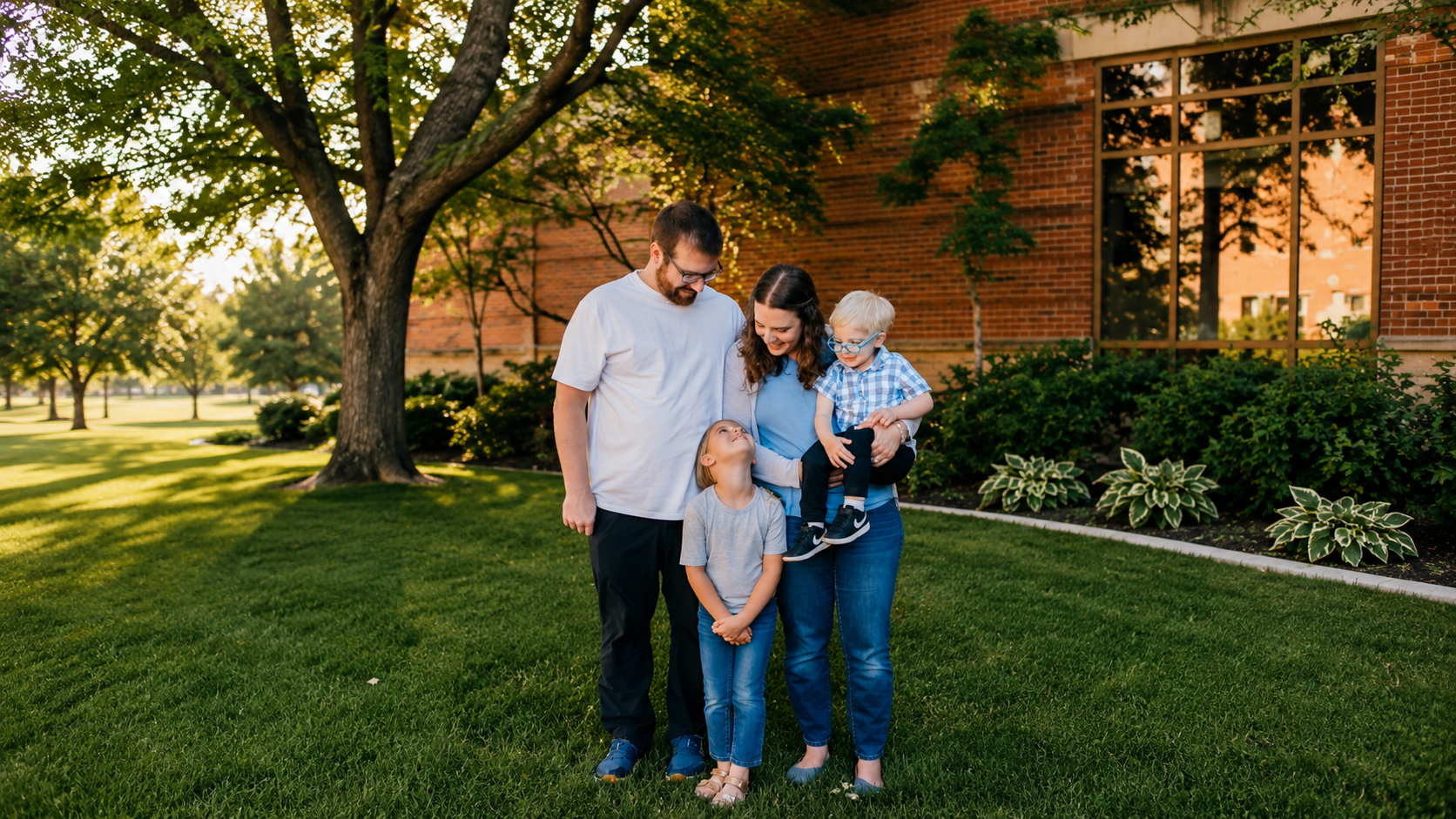
Part of our mission at The Good Network is not just to rally support, but to help our community understand what families like the Orlik Hills are truly facing — and Elliott's story is also a story worth learning from.
Medulloblastoma is the most common cancerous brain tumor in children, with roughly 500 new pediatric cases diagnosed in the United States each year. It develops in the cerebellum — the region at the lower back of the brain that controls balance, coordination, and movement. Because these tumors grow quickly and sit near the pathways that circulate fluid through the brain, they often cause a dangerous buildup of pressure called hydrocephalus — which is why Elliott's very first surgery was to relieve that pressure before the tumor could even come out.
Notice what Elliott's early symptoms looked like: repeated vomiting, occasional headaches, and a subtle loss of balance. These are the classic warning signs of medulloblastoma, and they are heartbreakingly easy to mistake for ordinary childhood illness — a stomach bug, a growth spurt, an off day. Persistent morning headaches, unexplained repeated vomiting, unusual clumsiness or wobbliness, extreme tiredness, and vision changes are all worth a conversation with your pediatrician, especially in combination. As Elliott's story shows, asking one more question can change everything.
Doctors now classify medulloblastoma into four molecular groups, each behaving differently. Elliott's tumor is a Group 4 medulloblastoma — the most common form, accounting for roughly 35% of all cases. Treatment typically means surgery to remove as much of the tumor as possible, followed by months of chemotherapy — the road Elliott is on right now.
And here is the reason for real hope: when medulloblastoma has not spread — and Elliott's spinal fluid came back clear — survival rates for children reach 70 to 80 percent. This is a long, hard fight. But it is a fight that children win. And Elliott has already shown everyone how much fight he has.
The Fight Right Now
Since May, Elliott has endured more than most of us will in a lifetime: the tumor removal, a feeding tube, a central line, a lumbar puncture, and round after round of chemotherapy. In June, the family traveled to Salt Lake City for stem cell collection — cells harvested and banked to help his little body recover from the high-dose chemotherapy that begins at the end of August, the most intensive phase of his treatment. It was in Salt Lake that his hair began to fall out. When it got everywhere, the nurses brought in a trimmer, and Elliott asked for one thing: that Mama be the one to shave it.
At home in Meridian, the fight continues in quieter ways. When a fever sent Elliott back to the hospital in July, Kasey learned to run IV antibiotics through his central line herself — every eight hours, including the middle-of-the-night doses — so her son could come home after just 48 hours instead of a week-long stay. Every delay in his counts, every fever, every transfusion reshuffles the family's week. Both parents stepped away from work when this began; Tate has only recently been able to return in pieces.
And through it all, there is Amelia.
Elliott's six-year-old big sister was nervous to visit him at first — the tubes, the monitors, how different everything looked. But when these two are together, Kasey says, "it's like this spark in both of them, this joy to be reunited." Amelia asks to help care for her brother — his G-tube, his central line. She plays with him and treats him exactly as she did before, because to her, he isn't "that chemo kid" the outside world might see. He's just her little brother. When a neighbor recently came to visit, Amelia rushed to grab the children's book about cancer so she could read it to him herself.
"She is his biggest cheerleader," Kasey says.
"They Just Showed Up"
If you want to understand what community means to a family in crisis, Kasey will tell you about Amelia's kindergarten performance.
She had promised her daughter she would be there. She'd arranged daycare coverage to make sure of it. And then came the diagnosis — and Elliott's first surgery landed at the exact hour of the performance. Tate and Kasey sat in a hospital instead of watching their daughter perform, hearts split in two.
But several of Kasey's friends showed up to that performance. They brought Amelia flowers and candy. Most importantly, they were simply there — loving on a little girl whose parents couldn't be.
"And I knew," Kasey says, "that we would be leaning on our incredible community more than I knew I could."
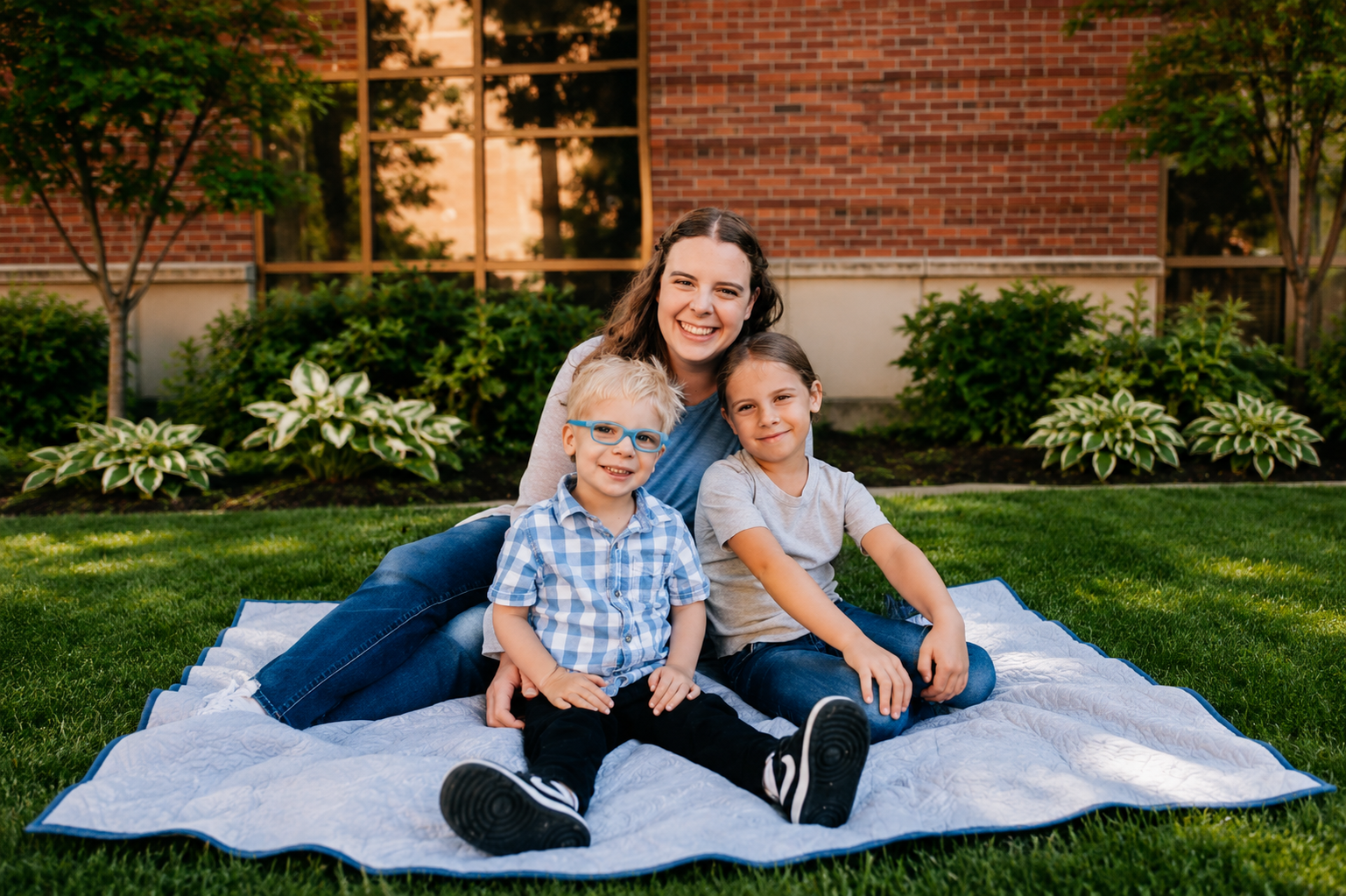
Since then, that community — close mom friends, their church small group, family, friends near and far — has stepped up in ways the family never imagined: the fundraiser, the meal trains, house cleaning, deliveries, and the simple texts that say we are thinking of you and praying for Elliott. Every single one matters.
When we asked Kasey what the family dreams of doing when this is all over, her answer was the most honest thing a mother in the middle of the fight can say:
"I honestly don't know. We know Make-A-Wish is available to us, but we haven't gotten that far yet. We just know we have to keep pushing, keep waking up and fighting with our boy — so that there can be a future for us as a family after this. These days I don't take a single moment for granted. Every night we spend under the same roof is a blessing."
Be Part of Elliott's Village
Friends and neighbors have organized a fundraiser called Elliott's Brave Battle, and the response has been beautiful — over $36,000 raised toward a $50,000 goal from more than 160 donors. But the hardest phase of Elliott's treatment is still ahead. So is the family's longest stretch away from work and normal life. Our job isn't done.
Every single dollar goes directly to Tate and Kasey, easing the financial weight so they can focus on the only thing that matters: getting their boy through this. The fundraiser is donation-protected and charges no platform fee.
Donate to Elliott's Brave Battle here.
If giving financially isn't possible right now, you can still stand with this family in ways that matter deeply:
Share their story. Every share puts Elliott's fight — and those easy-to-miss warning signs — in front of someone new. It costs nothing, and it works.
Join the meal train. One less thing for exhausted parents to carry is a gift in itself. You can sign up to provide a meal here.
Pray. From the very first day, this family has asked for prayers above all — for Elliott's strength through the intensive treatment ahead, for Amelia's tender cheerleader heart, and for Tate and Kasey as they take turns being strong.
One small favor the family has asked of the community: if you happen to see them out and about, please be gentle. Some days, they simply may not have the emotional energy to revisit everything they're going through. That doesn't mean they aren't grateful. Your smile, a simple hello, or letting them know you're thinking of them is more than enough—they truly appreciate your love and support.
No Family Should Fight Alone
Elliott's story is exactly why The Good Network exists. We believe no family should face their darkest chapter without a community holding them up — and that ordinary people, giving what they can, become extraordinary together.
Somewhere in Meridian tonight, a three-year-old who loves Paw Patrol and Spider-Man is ramming a toy shopping cart into the people trying to save his life, giggling until they fight back. His parents are counting every night under the same roof as a blessing. His big sister is reading him books and loving him exactly as he is.
The question the rest of us get to answer is simple: will we show up, the way Kasey's friends showed up at that kindergarten performance?
Give to Elliott's Brave Battle today. No gift is too small. Every dollar, every meal, every share, every prayer tells this family the same thing:
You are not alone. Your village is here.
The Good Network is committed to lifting up families in crisis by connecting them with the compassion and generosity of our community. To learn about other families who need support, or to share a story with us, visit TheGoodNetworkorg.org.
Medical information in this post is drawn from the National Cancer Institute and St. Jude Children's Research Hospital. It is provided for general education and is not a substitute for professional medical advice.
