
Steve, Teasha: And The Life Saving Warning That Was Almost Ignored
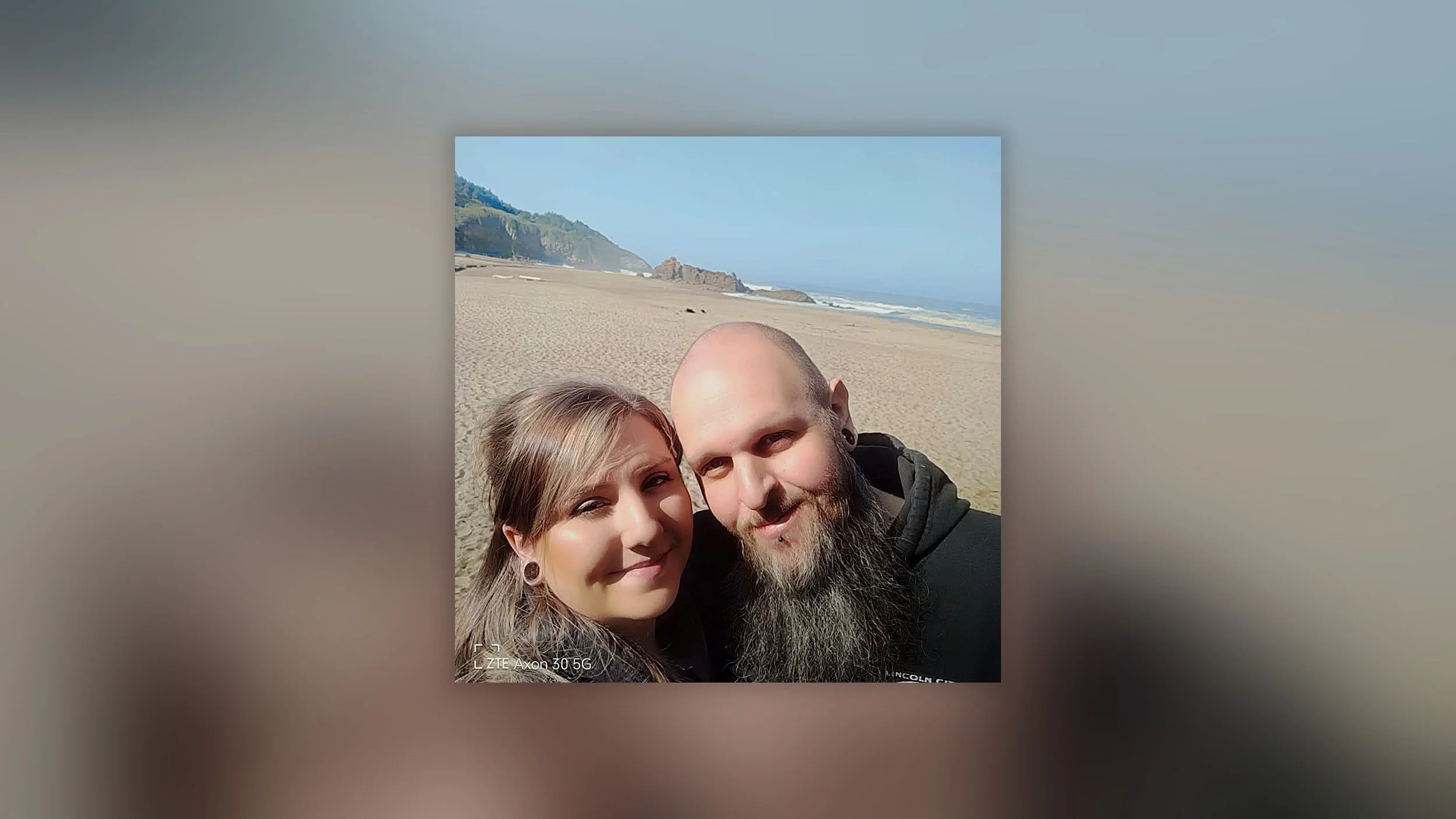
Shortly before posting this story, I received this message from Teasha
We are talking to the palliative care team in the morning. I will be signing a DNR tonight. He will not make it within the next couple of days if Texas refuses him. I have tried everything.
Please consider helping this family by donating. If you can’t donate, please share….
Her phone was on Do Not Disturb. It had to be. Teasha Dutt gets up at 2:45 in the morning to be at work by 3:45, and the only way to hold a schedule like that is to make the world go quiet for a few hours.
So there is no good reason her watch should have buzzed against her wrist just after midnight on a Wednesday in mid-August. No reason at all.
"For whatever reason my watch vibrated and woke me up," she says. "Like Devine intervention."
It was Steve, calling from their bathroom. He needed help.
She opened the door still half asleep, and what she saw took a second to understand. Her husband was a color she had never seen on him before. Only once in her life had she seen that color on anyone.
She had seen it on her mother, nine months earlier, on the morning she found her.
"I don't know how long I've been here," Steve told her. "The room is really bright. I can barely see you."
Then she saw the trash can. It was full of blood. There was blood across the white marbled floor of the house they had owned for less than a year.
The life they built at 2:45 in the morning
To understand what this valley stands to lose, you have to know what these two built, and how hard they worked for it.
Steve and Teasha Dutt have been together fifteen years and married for six. He drives for Cintas, four days a week, ten hours minimum, and more times than she can count, seventeen hours in a single day. She manages a fuel center here in Twin Falls. She arranged her schedule so she could ride in to work at the same hour he did, which meant they got the drive together, and it meant she could have the house handled by the time he dragged himself home somewhere between four and seven in the evening.
And then, most nights, this man who had just worked ten or twelve or seventeen hours would cook dinner.
Steve is the cook of the family. Ask anyone. Ask his sister Stacy, who describes him preparing meals "with love, not just for the two of them but for family and friends as well — everyone loves his food." On the nights he was too worn down to stand at the stove, he let Teasha try.
"Usually he acts like he likes it to make me happy," she says. "Even when I know it's bad. But that's just Steve."
That is the whole man, in one sentence, from the person who knows him best.
They had wanted children. It never happened for them. So there is Kona, the cat, who has always plainly preferred Steve, and there is Sage, the dog, who is Teasha's girl. Sage belonged to Teasha's mother first. Sage was in the house the night her mother died, and Teasha will tell you that the dog is the only one who actually knows what happened.
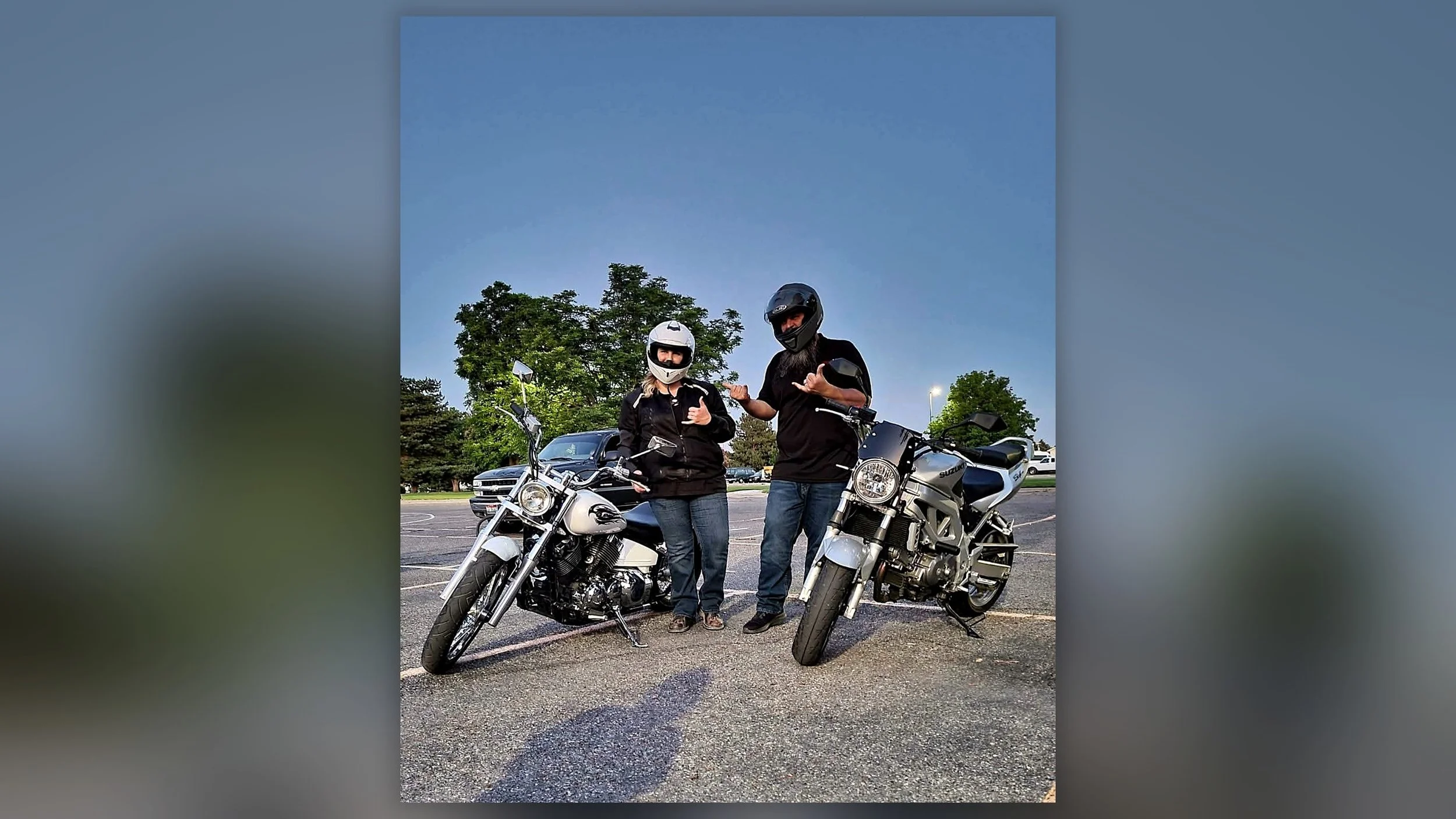
On days off they woke up slow. They took trips. They sat across from each other and played Tetris and marbles, which is a thing you only do with someone whose company is enough. They have two motorcycles, because a few years ago Steve taught his wife to ride, and they liked pointing them at some road they hadn't seen yet.
The bikes haven't been out at all this year. First her mother needed a knee replacement. Then grief arrived and took everything else.
What they had already survived
Teasha was fourteen years old when she became her mother's caretaker.
There was a car wreck in 2009, and the medical problems that followed never really stopped. So a teenager learned hospitals. She learned medications and appointments and how to read a room full of people in scrubs. She did that for sixteen years.
Her mother lived alone, and Teasha was there every single day. She made sure there was a Life Alert. She made sure there was a caretaker. She did everything a daughter can possibly do.
She left her mother's house around seven in the evening on November 3, 2025. She found her at six the next morning.
"Losing my mama was the most horrible thing I thought I would ever have to go through," she says. "We were best friends."
Here is the part that will stay with you. That same month, they closed on their first house — and the closing landed on the day of her mother's celebration of life.
They hadn't been looking, exactly. They had been in an apartment paying $975 with water and trash included, waiting for the market to soften or the rates to fall. Then late in October a house found them before it ever hit the market, and they knew they had to move fast or lose it.
The mortgage is $2,000 a month. Other bills run another $400 to $500 depending on the season. They went from $975 a month to roughly $2,400.
"We were barely making it, but we were making it," Teasha says. "And this is what we've always wanted — a place to call ours."
She could have walked away from that closing. Grief-flattened, signing papers on the day she said goodbye to her mother, no one would have blamed her.
She didn't, and the reason is the most human thing in this entire story:
"I knew I couldn't let that house go because my mama had walked through that house with me. We had already had memories in that house. Maybe only a couple, but that means the world to me."
Her mother walked those rooms. That is why they are fighting for them.
Midnight, and the longest drive in Idaho
Back to the bathroom floor.
Teasha ran and got him shorts and put them on him. He stood up off the toilet and collapsed. He was losing blood from both ends, and losing a great deal of it.
She called 911.
Steve didn't want her to. Even then — pale, half-blind, bleeding out on his own bathroom floor — Steve Dutt did not want an ambulance, because he is too proud and he did not want to take resources away from somebody who might need them more.
His wife called anyway. Everything that has happened since is because she did.
At the emergency room in Twin Falls they started a transfusion almost immediately and moved him to the ICU. Within thirty minutes he vomited 300cc of blood, lost consciousness, and locked up. A crash cart came through the door and the room filled with medical professionals.
"It was horrifying," she says. "The amount of blood that was all over that room was... traumatic."
They tried to repair the ruptured vessel right there in the room. They could not find the bleed — he was bleeding too hard to locate it. So they attempted a stent, just to slow it enough to get him on a helicopter to Boise.
"A last ditch effort," Teasha says. "The first of many to come."
Before he left Twin Falls, Steve had received nine units of blood and four of platelets. They loaded a cooler of blood and platelets onto the helicopter and gave him more in the air.
He reached Boise before his wife could. She was still on the road when the surgeon called to tell her that an emergency operation was the only thing left that could save her husband's life.
She told them to do it. The surgery took four and a half hours.
When the doctors came out, they told her the next twelve to twenty-four hours were critical. And then they gave her their advice: sign a DNR. If life-saving measures became necessary, they told her, her husband would most likely die a painful and violent death.
Steve and Teasha had talked about this. More than once. He had been completely clear with her about what he wanted.
"He has made it very clear to me that he wants everything done to save his life. I want everything done to keep him in my life. I said I absolutely will not sign that paper."
He improved that first day. Then Thursday came. His platelets dropped. His potassium spiked to critical levels. His heart rate shot to 150 and his blood pressure fell — all of it in front of her, again, in a tiny surgical ICU with an overnight doctor watching through a screen on the wall and calling out instructions.
She is thirty-two years old. She is sleeping in a chair.
"I went through a lot of medical trauma with my mom," she says. "So I seen it all. It's just so depleting, over consuming, over whelming, terrifying, and exhausting. I just didn't expect to be here sleeping in a chair next to my husband going through this at the age of 32."
And there is a question underneath all of it that she cannot put down:
"I haven't ever done anything wrong. We are good people, and I have a hard time understanding why this stuff keeps happening to me... To us."
"My gentle giant brother treats his wife exactly as he feels about her, with complete adornment and a tenderness I have never seen in any other man. He will tenderly rub his wife's arm and tuck her into his chest and bow his head into soothing and comforting her. He also does this to me when I'm upset.""As soon as it seemed that all of the dedication and hard work paid off, tragedy struck."— Stacy Dutt, Steve's sister
Please Read This Part: The Call She Made Anyway
A note on safety, because this family's story carries a warning that could save somebody else's husband.
Steve told his wife not to call 911. That instinct — don't make a fuss, don't take an ambulance somebody else might need, I'll be fine — is common in hardworking people across the Magic Valley. It is also, in a situation like this one, potentially fatal.
Sudden bleeding in the upper digestive tract is a medical emergency, and it can move faster than almost anyone expects. Steve vomited 300cc of blood within thirty minutes of reaching the ICU. He needed nine units of blood and four of platelets before he was stable enough to fly. None of that exists in the front seat of a personal vehicle.
Call 911 immediately — do not drive yourself or your loved one — if you see any of the following. Mayo Clinic and Cleveland Clinic both classify these as emergencies requiring immediate care:
Read Steve's own words again — "the room is really bright, I can barely see you" — and then read that table again. He was describing textbook signs of catastrophic blood loss while standing up and talking. That is how deceptive this can be.
Two things worth carrying out of this story. First, an ambulance is not a favor you are asking; it is a hospital that comes to your bathroom, and the treatment starts the moment the doors open. Second, if the person bleeding tells you not to call, call anyway. Teasha did. Her husband is still here.
This section is general safety information and is not medical advice or a description of any diagnosis. Sources: Mayo Clinic on gastrointestinal bleeding and Cleveland Clinic.
What $14,000 actually means
The fundraiser organized by Oshay Martinez of Twin Falls has a goal of $14,000. Set against the cost of an air ambulance, a four-and-a-half-hour emergency surgery, days of intensive care, and thirteen transfusions, that number is modest to the point of heartbreak.
It is not really a medical bill fund. Here is what it is.
Steve's income has stopped. Teasha's has effectively stopped too, because she will not leave that room, and no one who has read this far would ask her to. Meanwhile the mortgage on the house her mother walked through is $2,000 a month, and the bills behind it are another $400 to $500. That $14,000 is roughly five and a half months of keeping their home. That is the entire arithmetic.
They were barely making it when both of them were working. Right now, neither is.
→ DONATE TO STEVE AND TEASHA ←
Here is what specific amounts do:
$25 buys her meals for a day so she doesn't have to choose between eating and the parking garage. $50 covers a day of hospital parking and gas. $100 is a night she gets to sleep near his room instead of in a chair. $250 is a week of not lying awake doing math. $2,000 is one month that their house stays their house.
At the time of writing, twelve people have given $1,775 of the $14,000. Twelve. In a valley of this size, that is not a reflection of our generosity. It is a reflection of how few people know yet.
If you cannot give money, you are not off the hook — and that is good news
This is a small community and there is more than one currency here.
Share this. GoFundMe's own data suggests each share brings in about $50 on average. That is not nothing; that is her groceries for two days, generated by ten seconds of your thumb.
Take something off their plate. Friends and family currently have Kona and Sage. Someone should be mowing that yard, collecting that mail, and watching that empty house. Someone should be sending gas cards for the two-hour run between Twin Falls and Boise, and grocery or restaurant cards Teasha can actually use inside a hospital.
If you work at Cintas, or with Steve, or at the fuel center with Teasha — you are the closest thing this story has to a cavalry. Talk to your managers about donated leave, a payroll drive, a hardship program. Employer-side help arrives faster and larger than anything a comment section can do.
Say something to her. She told us she isn't good with words right now. She doesn't need you to be either. "We've got you" will do. Stacy asked specifically for prayer, and this family is holding on "in a balance of hope and worry" — her words.
And when Steve wakes up, he should find out that a whole valley of people he has never met were pulling for a Cintas driver who cooks for his wife after seventeen-hour days and tells her the bad dinners taste good.
One last thing
Teasha didn't set that watch to buzz. It was on Do Not Disturb. She still can't explain it, and she isn't trying to; she just calls it Devine intervention and lets it be what it is.
Something woke her up in time.
Consider this your buzz on the wrist. Somebody in our community is bleeding out financially while she fights for her husband's life in a chair in Boise, and now you know about it.
Don't put it on Do Not Disturb.
→ GIVE HERE ←
Steve remains in the ICU in Boise. Teasha has not left. If you know this family and can offer practical help, or if you have a story about Steve you'd like added to this page, contact us at — we will keep updating.
Details in this story were shared directly by Teasha Dutt and by Steve's sister, Stacy Dutt, and are published with the family's permission. Medical details reflect the family's account of events.
